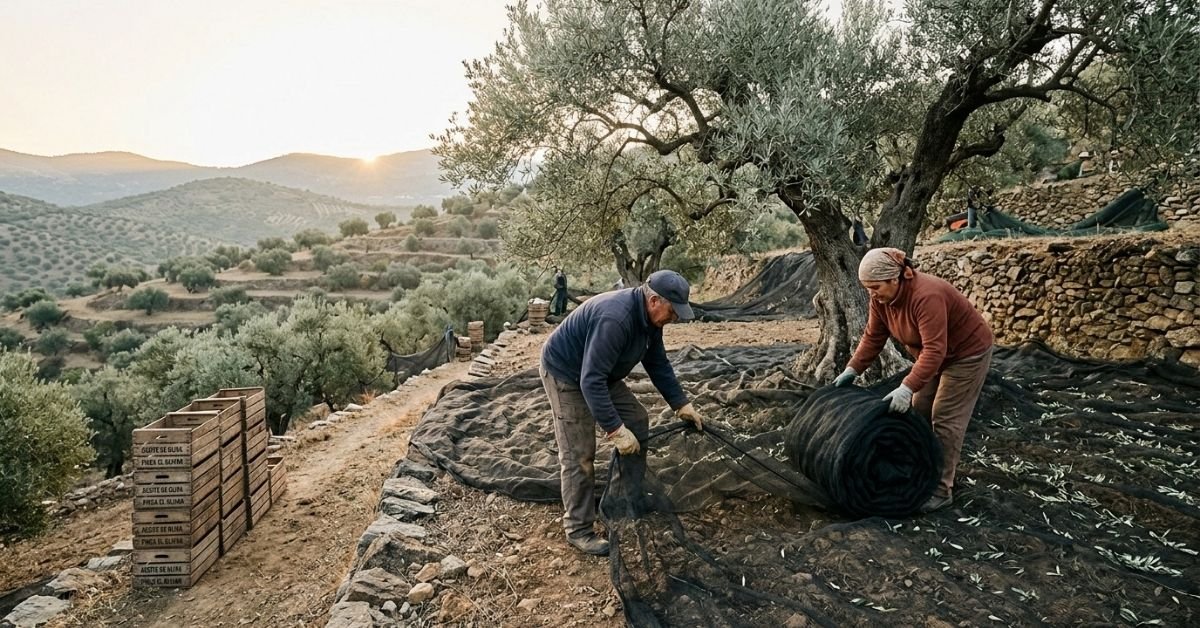
GREECE SEASONAL AND AGRICULTURAL WORK VISA JOBS 2026: PAY AND SEASON DATES
Anyone holding a passport from outside the European Union can work legally on a Greek farm through the greece seasonal work visa 2026 framework, but only if a Greek employer opens the file first, only for the length of the contract that employer signs, and only up to a ceiling of nine months in any twelve. Everything else people argue about online is detail hanging off those three conditions.
The detail happens to be published, and it is mostly numbers and dates. So that is how this guide handles it.
Quick answer: Greece’s seasonal work route allows non-EU nationals to take fixed-term jobs in farming, tourism and hospitality under a contract tied to one named employer. Following the 2026 reform of the country’s immigration rules, the maximum stay rose to nine months per twelve-month period. Pay may not fall below the national statutory minimum, currently €41.09 gross per working day for manual roles.
Table of Contents
- 1. WHAT CHANGED IN 2026 AND WHY OLDER GUIDES DISAGREE
- 2. THE GREECE SEASONAL WORK VISA 2026 RULEBOOK AT A GLANCE
- 3. PAY: WHAT THE STATUTORY FLOOR IS WORTH ACROSS A SEASON
- 4. GREECE HARVEST SEASON DATES AND THE MONTHS EMPLOYERS ACTUALLY RECRUIT
- 5. THE APPLICATION CHAIN AND WHAT EACH STAGE COSTS
- 6. WHERE THIS ROUTE GOES WRONG
WHAT CHANGED IN 2026 AND WHY OLDER GUIDES DISAGREE
For most of the past decade, ordinary seasonal employment in Greece was capped at six months a year, with a longer allowance carved out for fishing crews. A great many pages still describe that system, which is why a reader comparing three articles will often see three different numbers.
Greece rewrote the framework in February 2026, bringing its national rules into line with the European Union’s revised single-permit directive. The reform did three practical things. It combined the residence and work approvals into one application procedure. It lifted the seasonal ceiling to nine months inside any rolling twelve-month window. And it pushed the employer’s invitation and hiring approval into an electronic system run by the migration authorities, replacing a slow, paper-driven route through regional offices. Licensed temporary employment agencies were also allowed into the chain as direct employers, under capital and reporting conditions designed to keep informal middlemen out.
What did not change matters just as much. The route is still driven by the employer, still limited by a quota, still bound to a single job with a single company, and still closed as a road to permanent settlement.
THE GREECE SEASONAL WORK VISA 2026 RULEBOOK AT A GLANCE
| Rule | Position in 2026 |
|---|---|
| Maximum stay | Up to nine months within any rolling twelve-month period |
| Fishing sector | Treated separately, with a longer permitted period than farm work |
| Who starts the process | The Greek employer, electronically, before any visa form is touched |
| Changing employer | Not allowed — the permission covers one employer and one post |
| Counts toward long-term residence | No, seasonal time does not accumulate |
| Bringing family | Not available on a seasonal permission |
| Quota | Set by ministerial decision, divided by region and by job category |
| Staying past the contract | Risks a multi-year ban on returning |
Two of those rows quietly ruin people’s plans. The employer lock means a placement that turns out badly cannot simply be swapped for a better farm down the valley without losing legal status. The residence row means that five consecutive seasons in Greece build no entitlement to stay. If your real objective is to settle in Europe with your family, this is the wrong document and no amount of repeat seasons will convert it into the right one.

PAY: WHAT THE STATUTORY FLOOR IS WORTH ACROSS A SEASON
A contract cannot be approved unless the wage in it meets or exceeds the national minimum for unskilled work. Since the April 2026 adjustment, that floor sits as follows.
| Category | Statutory minimum, from April 2026 | Previous level |
|---|---|---|
| Manual and field work | €41.09 gross per working day | €39.30 |
| Salaried roles | €920.00 gross per month | €880 |
| Payment cycle | Fourteen payments a year, twelve salaries plus holiday allowances | — |
Field labour is priced on the daily figure. Because Greek pay is distributed across fourteen annual payments rather than twelve, the twelve-month equivalent of the monthly minimum lands closer to €1,073 once holiday allowances are folded in. That single accounting quirk explains why two sources can quote different “Greek minimum wages” and both be telling the truth.
Turned into season arithmetic:
| Contract shape | Working days | Gross at the legal floor |
|---|---|---|
| One month at 25 working days | 25 | around €1,027 |
| A four-month olive season | around 100 | around €4,109 |
| A full nine-month permission | around 225 | around €9,245 |
Treat those as multiplication, not as an offer. Real earnings shift with overtime, with piece-rate arrangements paid by crate or kilogram, and with the deductions that come off the top. Social insurance contributions and income tax reduce the gross. Where a sector or company agreement sets a higher rate than the statutory one, the higher rate governs — the minimum is a floor and never a cap.
One structural benefit lifts the real value of the package. The employer must confirm that accommodation will be made available to the workers being invited. Housing is written into the conditions rather than offered as a kindness, and that is the main reason net savings from a Greek farm season frequently beat what the daily rate suggests on paper. Ask early whether meals are also included, because that varies by farm and is worth several hundred euros over a winter.
GREECE HARVEST SEASON DATES AND THE MONTHS EMPLOYERS ACTUALLY RECRUIT
| Sector or crop | Main growing areas | Working window | Employers usually recruit |
|---|---|---|---|
| Olives grown for oil | Crete, southern and western mainland regions | Mid-October to late January | June to September |
| Late-ripening olive varieties | Aegean and Ionian islands | December to February | August to October |
| Citrus | Southern mainland and northern plains | November to March | August to November |
| Grape harvest | Northern and southern wine regions | Late August to October | May to July |
| Greenhouse vegetables | Southern coastal areas | Autumn through to spring | Rolling through the year |
| Tourism and hospitality | Island resorts and coastal towns | April to October | January to March |
The olive harvest anchors the agricultural year. Picking generally opens between late September and the middle of October and continues into late January, stretching a few weeks further on some islands. Altitude, variety and the weather all shift the start date, so two farms a hundred kilometres apart will not begin on the same day.
The error that costs applicants an entire year is timing. People start searching once harvest photographs appear in their feeds, by which point the quota slots are allocated and the workers are already picking. If your target is the late-2026 olive season, the hiring window opened in the middle of the year.
THE APPLICATION CHAIN AND WHAT EACH STAGE COSTS
| Stage | Who acts | What happens | Indicative cost |
|---|---|---|---|
| 1 | Employer | Confirms a quota slot exists for that region and job category | — |
| 2 | Employer | Files the electronic invitation with the competent authority | A per-worker administrative fee |
| 3 | Employer | Lodges the approved fixed-term contract, a housing declaration, tax records and a social insurance deposit | Deposit scales with the contract |
| 4 | Authority | Approves the hiring and notifies the Greek consulate covering your country | — |
| 5 | Applicant | Applies for the national long-stay visa at that consulate | Consular fee applies |
| 6 | Applicant | Travels and completes any remaining in-country formalities | — |
| 7 | Applicant | Works for the named employer only, then departs on time | — |
Even with electronic filing, the realistic measure of this process is months rather than weeks. Leave a buffer between approval and the first day of work, because consular appointment availability differs enormously from one country to another and is the stage most likely to slip.
The quota deserves particular caution. Admission volumes are fixed by ministerial decision and split across regions and job categories, and headline totals circulate widely online without much verification behind them. The number that actually affects you is not the national figure but the local one, so the useful question to put to an employer is simple: has a slot been confirmed for this region and this job title? Ask it before you spend anything.
WHERE THIS ROUTE GOES WRONG
Because the process begins with an employer, nobody can sell you a Greek seasonal work visa as a product. Any intermediary asking for a large payment up front in exchange for a guaranteed placement, promising approval without naming an employer, or suggesting that a short-stay entry can be converted into farm work after arrival is describing a system that does not exist. That advice holds equally whether you are applying from South Asia, from West Africa, from Southeast Asia, from Latin America or from a non-EU country inside Europe.
Three further failure points recur. Applicants assume they can move farms if the placement disappoints, and find the permission does not stretch that far. They assume repeat seasons accumulate towards residence rights, and they do not. And they read the nine-month figure as an entitlement, when the actual permitted stay equals the contract length and not a day more.
Bilateral labour arrangements are a separate matter again. Greece has operated seasonal and fishing arrangements with certain partner countries and has held talks with others, but negotiations are not a scheme and an announcement is not an open corridor. If you hear that a route has opened for your nationality, confirm it through your own country’s labour or overseas employment authority before paying anyone.
KEY TAKEAWAYS
- The 2026 reform lifted the seasonal ceiling to nine months in any twelve and moved employer filings onto an electronic system.
- The statutory pay floor from April 2026 is €41.09 gross per working day for manual roles and €920 gross per month for salaried ones, paid across fourteen annual payments.
- A four-month olive season at the legal floor works out near €4,100 gross, with employer-provided accommodation built into the conditions.
- Farms recruit two to four months ahead of ripening; olives are picked from roughly mid-October to late January.
- The permission is tied to one employer, carries no family rights and builds nothing towards long-term residence.
- No agent can sell this visa. Without a named employer and an approved contract, there is no application to make.
The bottom line: Greece offers one of the more reachable legal doors into European agricultural work, and its pay rules are published clearly enough that nobody needs to rely on rumour. It is a short-term earnings instrument rather than a migration pathway, and it rewards people who move months before the season instead of during it. Measured as a daily wage plus housing, it holds up well; measured as a route to settling in Europe, it will disappoint every time.
FREQUENTLY ASKED QUESTIONS
Can family members join a seasonal worker in Greece?
No. Family reunification belongs to the standard, non-seasonal permissions that meet income, housing and duration conditions. The seasonal route carries no family rights at all.
Is knowledge of Greek required for farm work?
Not as a legal condition. Employers set their own expectations, and basic English is usually sufficient in fields, packing houses and kitchens, though a handful of Greek phrases makes daily work considerably easier.
What happens to someone who stays after the contract ends?
Overstaying risks a ban on returning that can run for several years, which also closes the door on future seasons. Leaving on schedule is what keeps a worker eligible to be invited again.