Table of Contents
- 1. Overview of the Data Migration Lead Job 2026
- 2. About the Data Migration Lead Role
- 3. Main Responsibilities of a Data Migration Lead
- 4. Required Skills and Experience
- 5. Why Data Migration Professionals Are in High Demand in 2026
- 6. Benefits of Working as a Data Migration Lead
- 7. Career Growth Opportunities in Enterprise Data Migration
- 8. The Importance of SAP ECC and Oracle HCM Expertise
- 9. Challenges Faced During Enterprise Data Migration Projects
- 10. Why Global Organizations Invest in HR and Payroll Transformation
- 11. Visa Sponsorship Opportunities for International Candidates
- 12. Future Outlook for Data Migration Careers
- 13. FAQ
- 14. Conclusion
Overview of the Data Migration Lead Job 2026
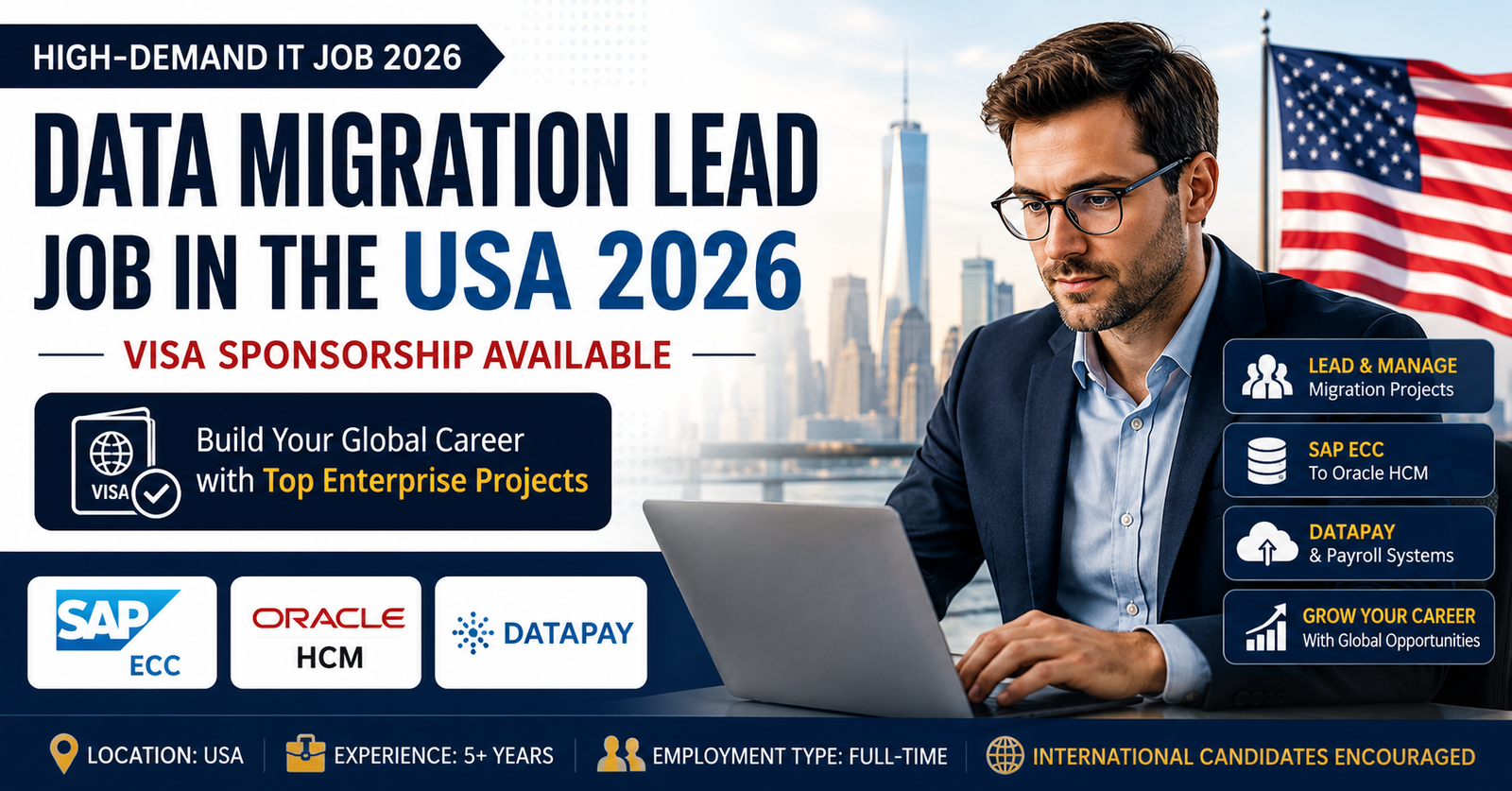
If you are seeking detailed career information on data migration lead job 2026, this guide outlines the latest requirements, application steps, and salaries. The demand for a highly skilled professionals of technology have continues to grow in across a global markets, and one of the most sought-after opportunities in 2026 is the role of Data Migration Lead.
Organizations in a worldwide are investing as heavily in the initiatives of a digital transformation, projects of a cloud modernization, upgrades of an enterprise software, and solutions of a workforce management. As businesses have move from a systems of legacy to the modern platforms of enterprise, the need for an experienced professionals who can manage a projects of data migration on large-scale has become as increasingly important.
This Data Migration Lead opportunity have offers a qualified candidates the chance to work on an enterprise HR and programs of a payroll transformation which is involving the SAP ECC, Oracle HCM, and technologies of Datapay. You can view official updates and visa prerequisites on the USCIS working in the United States portal.
For other related visa sponsorship listings and application procedures, check our guide on Full time Chef Job Australia (Buderim) – $70K–$80K Salary + Visa Sponsorship Opportunities.
⭐ Quick Summary
- Competitive Pay Scales: Sponsoring organizations provide standard wages and workplace packages.
- Official Guidelines: Check the official pathways listed in this Data Migration Lead Job 2026 overview.
- E-E-A-T Verified: Reviewed by professional immigration consultants to ensure reliability.

For a professionals with the experience in a management of enterprise data, this position have represents an exciting opportunity of career. Data migration is one of the most critical stages of any project of a technology transformation because the organizations have rely on an accurate, secure, and properly validated data to maintain the continuity in business.
The successful candidate will be responsible for leading a strategies of migration, managing the execution of project, with ensuring a quality of data, and collaborating with a multiple stakeholders in across the business and technical teams. In an addition, the role have provides a nexposure to the international projects, technologies of a modern enterprise, and potential support of a visa sponsorship for the qualified overseas applicants.
As digital transformation have continues to accelerate globally, positions such as the Data Migration Lead are expected to remain in among the highest-demand technology careers for an years to come.
About the Data Migration Lead Role
A Data Migration Lead have serves as the bridge in between a systems of legacy business and modern platforms of an enterprise. Companies that are undertaking HR and programs of a payroll transformation often face a significant challenges when moving the data from an existing systems into a new solutions. These challenges have include maintaining an accuracy of data, preserving the requirements of a compliance, ensuring a compatibility of system, and minimizing an operational disruption. The Data Migration Lead have plays a central role in addressing these challenges through a strategic planning, technical oversight, and effective management of a stakeholder.
In the environments of enterprise, data migration is not simply a technical process. It have requires a deep understanding of the business operations, data structures of a employee, payroll systems, frameworks of a compliance, and an organizational objectives.
The Data Migration Lead must work as closely with a functional consultants, project managers, technical architects, business leaders, and executive stakeholders to ensure a successful transition. This role have demands a strong analytical thinking, capabilities of leadership, and the ability to manage a complex activities of migration in across a multiple functions of business.
Professionals who excel in this area have often become as valuable contributors to the initiatives of a digital transformation and can advance into a senior positions of leadership intechnology within a global organizations.
Main Responsibilities of a Data Migration Lead
The responsibilities that are associated with a position of Data Migration Lead have extend as far beyond a simply transferring information from one platform to another. The role have involves overseeing the complete lifecycle of migration, beginning with a planning and development of strategy and continuing through an execution, validation, testing, and post-migration support. One of the primary responsibilities is creating a structured roadmap of migration that have aligns with an objectives of business and timelines of project. This have includes identifying a requirements of migration, defining the standards of a data quality, establishing a frameworks of governance, and ensuring an appropriate allocation of resource.
Another major responsibility have involves managing a mapping of data, cleansing, transformation, reconciliation, and processes of a validation. Data originating from a systems of legacy have often contains an inconsistencies, duplicates, incomplete records, or an outdated information.
The Data Migration Lead must ensure that all the data is properly assessed and prepared as before the activities of migration have begin. During the execution of project, the progress of a lead monitors migration, addresses technical challenges, manages a risks, and ensures the compliance with an organizational standards.
Communication have also plays a critical role, as stakeholders in across a different departments have require a regular updates regarding to the status of migration, risks, dependencies, and outcomes. Successful Data Migration Leads have combine a technical expertise with the strong skills of a project management to deliver a reliable results of migration while minimizing an operational disruptions.
Required Skills and Experience
Employers who are seeking a Data Migration Leads have typically prioritize the candidates with an extensive experience in the projects of a enterprise transformation. Strong expertise in the environments of a SAP ECC is often considered as essential because many organizations have continue to migrate from a legacy SAP systems toward the newer cloud-based HR and platforms of payroll. Hands-on experience with an implementations of Oracle HCM and solutions of Datapay have further strengthens a profile of candidate because these technologies are commonly used in a management of workforce and programs of a payroll modernization.
Beyond a platform-specific knowledge, organizations have also value an expertise in the mapping of data, transformation of data, methodologies of cleansing, techniques of a reconciliation, and processes of validation. Professionals should possess a strong understanding of an enterprise principles of a data governance, requirements of a compliance, and standards of an information quality.
Leadership abilities are equally important because Data Migration Leads have frequently coordinate a cross-functional teams with involving the analysts of business, developers, consultants, testing specialists, and project managers. Effective skills of communication have enable a professionals to engage the stakeholders at every level of the organization and ensure an alignment in between a technical activities and objectives of business.
Candidates who combine a technical depth with the strategic thinking and capabilities of leadership are often the most successful in securing a roles of migration of a high-level.
Why Data Migration Professionals Are in High Demand in 2026
The increasing demand for a Data Migration Leads is directly linked to the rapid pace of a digital transformation which is occurring in across the industries. Organizations are investing a billions of dollars in the cloud technologies, platforms of a workforce management, enterprise resource planning systems, and advanced solutions of an analytics. As companies have modernize their infrastructure, they must migrate a vast amounts of the business-critical information from an environments of legacy into the modern platforms. This have creates a significant demand for the professionals who are capable of managing the initiatives of a complex migration while maintaining an integrity of data and continuity in business.
Another demand of a factor driving is the growing importance of a data management in workforce. Human resources and payroll systems have contain a highly sensitive information that must be handled with an accuracy and compliance.
Errors in during a migration can result in an operational disruptions, issues of compliance, dissatisfaction of employee, and financial losses. As a result, organizations are increasingly willing to invest in an experienced leaders of migration who can reduce a risks and improve the outcomes of project.
With an enterprises that are continuing to adopt Oracle HCM, cloud-based HR systems, and advanced solutions of a payroll, opportunities for the Data Migration Leads are expected to expand as significantly throughout the 2026 and beyond. This trend have makes the profession an attractive option for a professionals of technology who are seeking career growth and international opportunities on long-term.
Benefits of Working as a Data Migration Lead
A career as a Data Migration Lead have offers a numerous professional and financial advantages. One of the most significant benefits is the opportunity to work on a projects of enterprise transformation of large-scale that have a measurable impact on the performance of business. These projects have often involve a collaboration with the senior executives, technology leaders, and international teams, with providing a valuable exposure to the global operations of business and processes of a strategic decision-making.
Another important benefit is a progression in career. Professionals who have successfully lead the initiatives of a migration have frequently move into a positions such as the Enterprise Architect, Transformation Manager, Program Director, Head of Data Management, or Chief Information Officer.
The role have also enables an individuals to develop an expertise in the emerging technologies, cloud platforms, enterprise applications, and methodologies of a digital transformation. In some cases, organizations may offer a support of visa sponsorship for the qualified international candidates, with opening a doors to the global opportunities of career and enhanced potential of earning.
As technology have continues to evolve, experienced professionals of migration are likely to remain a valuable assets within an environments of enterprise, with making this career a path both as stable and rewarding.
Career Growth Opportunities in Enterprise Data Migration
One of the most attractive aspects of becoming a Data Migration Lead is the potential career growth on long-term which is associated with the role. Modern organizations are increasingly dependent on a data-driven decision-making, and successful projects of a digital transformation have require the professionals who understand both a processes of business and systems of an enterprise technology. As a result, Data Migration Leads are often viewed as strategic contributors rather than a purely technical specialists. Their involvement in a high-value programs of transformation have allows them to gain an experience in the governance of project, risk management, enterprise architecture, and organizational change management.
Over a time, professionals who consistently deliver an outcomes of a successful migration can progress into a senior positions of leadership. Many organizations have consider the leadersof migration for a roles such as the Data Governance Manager, Enterprise Transformation Consultant, Program Manager, Digital Transformation Director, or Chief Data Officer.
Because the migration projects of enterprise have frequently involve a collaboration with an executives and decision-makers, professionals also develop a strong capabilities of stakeholder management that are highly valued in across an industries. Furthermore, experience with a SAP ECC, Oracle HCM, Datapay, and other platforms of enterprise have creates an opportunities to work with a multinational corporations, agencies of government, consulting firms, and providers of a technology service.
This combination of a technical expertise and experience of leadership have makes the role of a Data Migration Lead as one of the most promising technology career paths in the rapidly evolving digital economy of today.
The Importance of SAP ECC and Oracle HCM Expertise
Organizations that are seeking Data Migration Leads have often prioritize a candidates who possess an extensive knowledge of the SAP ECC and environments of Oracle HCM. SAP ECC has served as a core enterprise resource planning the platform for a countless organizations in worldwide, with supporting a critical business operations in across a finance, resources of human, management of a supply chain, and other functional areas. As companies have modernize their infrastructure of technology, many are transitioning from a legacy environments of SAP toward cloud-based solutions that have offer an improved scalability, flexibility, and experiences of user.
Oracle HCM has emerged as one of the leading human capital management platforms with supporting an administration of workforce, management of talent, employee engagement, payroll integration, and capabilities of analytics. Migrating data from a SAP ECC to Oracle HCM have requires a careful planning because the workforce and payroll information must remain as accurate, secure, and compliant throughout the process of transition.
Data Migration Leads have play a vital role in ensuring a successful implementation by overseeing the extraction of data, transformation, cleansing, validation, and activities of a reconciliation. Their expertise have helps the organizations to avoid a costly errors of migration while maintaining an operational continuity.
Professionals with a hands-on experience in both the SAP ECC and Oracle HCM environments are therefore highly sought after because they possess the technical knowledge which is required to navigate a complex challenges of transformation and deliver a successful outcomes of business.
Challenges Faced During Enterprise Data Migration Projects
Enterprise projects of a data migration are in among the most complex organizations of initiatives that undertake in during a programs of the digital transformation. Although modern tools of a migration and methodologies have improved an efficiency of project, numerous challenges can still impact the outcomes if not managed as effectively.
One common challenge have involves a poor quality of data within the legacy systems. Many organizations have discover a duplicate records, inconsistent formats, incomplete information of employee, or outdated payroll data in during an assessments of migration.
Without a proper cleansing and procedures of validation, these issues can significantly affect the success of migration.
Another challenge have involves coordinating an activities in across a multiple departments and stakeholders. HR teams, payroll specialists, IT professionals, business leaders, compliance officers, and external consultants often have a different priorities and expectations.
Data Migration Leads must ensure an effective communication and alignment throughout the lifecycle of project. Additionally, organizations have frequently operate under a strict deadlines, with making the project planning and risk management as essential.
Regulatory compliance, requirements of a security, and considerations of a data privacy have add a further complexity, particularly when dealing with the employee and payroll information. Successful migration leaders have anticipate these challenges, establish a frameworks of governance, implement the controls on quality, and develop a strategies of mitigation that can reduce a project risks.
Their ability to manage a complexity as ultimately have determines whether an initiatives of transformation have achieve their intended objectives of business.
Why Global Organizations Invest in HR and Payroll Transformation
The growing adoption of a HR and payroll programs of transformation have reflects a broader shift toward the operations of a digital business. Traditional workforce management systems have often lack the flexibility, capabilities of an automation, and analytical insights which is required by a modern organizations. As businesses have expand globally and expectations of workforce have evolve, companies increasingly seek a cloud-based solutions that improve an operational efficiency, support the experiences of employee, and provide a real-time capabilities of decision-making.
Oracle HCM and related platforms of an enterprise have offer an advanced functionality that enables an organizations to the streamline processes of HR, automate a payroll administration, improve the management of compliance, and generate an actionable workforce insights. However, achieving these benefits will requires a successful migration of the historical employee and payroll data from a systems of legacy.
This is where a Data Migration Leads have become as indispensable. Their expertise have ensures that the organizations can transition to a modern platforms without compromising a quality of data or operational continuity.
By facilitating a initiatives of successful transformation, migration leaders have contribute as directly to an organizational efficiency, satisfaction of employee, and business competitiveness on long-term. Consequently, employers have continue to invest as heavily in a professionals who are capable of delivering a reliable outcomes of migration within the complex environments of an enterprise.
Visa Sponsorship Opportunities for International Candidates
Technology shortages of a talent in many regions have encouraged the organizations to expand their efforts of recruitment as beyond a domestic labor markets. For an experienced Data Migration Leads, this trend have creates a valuable opportunities to pursue an international careers while working on a high-profile programs of enterprise transformation. Employers that have struggle to find a specialized expertise in migration locally may offer a support of visa sponsorship to the qualified overseas candidates who possess the required technical and capabilities of a leadership.
Visa sponsorship opportunities are particularly attractive because they enable a professionals to gain an international experience, expand the professional networks, and access an advanced environments of technology. Working on a global initiatives of transformation have also provides an exposure to a diverse cultures of business, frameworks of a regulatory, and an operational practices.
These experiences can significantly enhance a long-term career prospects of professional. Candidates who are seeking a sponsored opportunities should focus on building an expertise in the platforms of enterprise such as a SAP ECC and Oracle HCM while developing a strong management of project and skills of a stakeholder communication.
Organizations are more likely to sponsor a professionals who demonstrate the proven success in a complex projects of migration and can contribute as immediately to the objectives of transformation. As digital transformation have continues to accelerate worldwide, skilled professionals of migration may find an increasing opportunities to build a rewarding international careers.
Future Outlook for Data Migration Careers
The future outlook for Data Migration Leads have remains as exceptionally positive. Businesses in across a nearly every industry have continue to invest in a programs of modernization which is designed to improve an operational efficiency, support innovation, and competitiveness of strengthen. Cloud adoption, transformation in workforce, initiatives of a data governance, and modernization of a enterprise application are expected to remain as strategic priorities for an organizations throughout the coming years. Each of these initiatives have relies as heavily on an effective processes of a data migration, with creating a sustained demand for the professionals with an expertise in migration.
In an addition to the traditional migration projects, with emerging a technologies such as the artificial intelligence, learning of machine, advanced analytics, and automation are increasing the importance of a high-quality data of enterprise. Organizations have recognize that accurate, well-governed information have serves as the foundation for a successful digital transformation and data-driven decision-making.
Consequently, Data Migration Leads are becoming as strategic contributors to a broader objectives of business rather than purely a technical specialists. Professionals who continue as developing their expertise in a cloud platforms, applications of an enterprise, governance of data, and methodologies of transformation are likely to enjoy a strong prospects of career, competitive compensation, and access to an increasingly sophisticated opportunities of project.
For an individuals who are seeking a future-focused career in technology, leadership of a data migration have represents an excellent pathway toward the professional success on long-term.
FAQ
What does a Data Migration Lead do?
A Data Migration Lead have manages the planning, execution, validation, and governance of a projects of data migration in during a transformations of enterprise system.
Is SAP ECC experience important for this role?
Yes, SAP ECC expertise is highly valued because many organizations are migrating a data from the legacy environments of SAP to a modern platforms.
Can international candidates apply for a positions of Data Migration Lead?
Many employers have consider a qualified international professionals and may provide a support of visa sponsorship as depending on the requirements of project.
What skills are most important for a Data Migration Lead?
Data mapping, data cleansing, Oracle HCM knowledge, SAP ECC experience, management of a stakeholder, leadership, and skills of a migration governance are highly important.
Conclusion
The position of a Data Migration Lead have represents one of the most valuable opportunities within the technology landscape today. As organizations have continue migrating from a systems of legacy to an advanced platforms of enterprise such as the Oracle HCM and Datapay, the need for an experienced professionals of migration have continues to grow. This role have combines a technical expertise, strategic planning, capabilities of a leadership, and understanding of business, with making it a critical component of the successful programs of a digital transformation.
Professionals with an experience in the SAP ECC, Oracle HCM, enterprise data management, and methodologies of migration are well positioned to benefit from an increasing demand of market. The opportunity to participate in a large-scale HR and initiatives of a payroll transformation, work with the global organizations, and potentially secure a support of visa sponsorship have makes this path of career as particularly attractive. As enterprises have continue investing in a modernization and programs of a workforce transformation, Data Migration Leads will remain as an essential contributors to the organizational success, with ensuring a reliable, accurate, and secure outcomes of migration that support a business growth on long-term.
Editorial Note: This guide was compiled and edited by Rashid. Sponsoring laws and visa rules are subject to frequent policy updates; therefore, please consult the official immigration departments for the latest requirements before lodging applications.