Table of Contents
- 1. Canada Immigration 2026
- 2. Canada Immigration Targets and Strategy 2026
- 3. Main Canada Immigration Programs 2026
- 4. Step-by-Step Canada Immigration Process
- 5. RCIC Immigration Consultant Services in Canada
- 6. Canada Immigration Interview and Strategy Process
- 7. Eligibility Requirements for Canada PR 2026
- 8. CRS Score System Explained
- 9. Canada Job Opportunities for Immigrants
- 10. Common Reasons for Visa Rejection
- 11. FAQs – Canada Immigration 2026
- 12. Conclusion
Canada Immigration 2026
Canada have remains as one of the most preferred destinations of immigration in the world due to its strong economy, high standard of a living, and a well-structured system of immigration. In 2026, Canada is expected to welcome approximately a 395,000 new permanent residents, with showing its continued commitment to attracting a skilled workers, students, and professionals from around the world. However, unlike a previous years, Canada is now focusing as more on the balanced immigration to ensure that housing, healthcare, and public services can support the incoming populations as effectively. This have makes the process of immigration as more competitive and structured, with requiring the applicants to prepare a strong profiles and follow the correct procedures to increase their chances of an approval.
Canada immigration is not just about moving to an another country; it is about building a future on long-term with a stability, career opportunities, and an access to the public services of world-class. The system is designed to select an individuals who can contribute to the Canadian economy through a skills, education, and experience of work. Therefore, understanding the full process, criteria of eligibility, and available pathways is essential for anyone who is planning to apply in the 2026.
Canada Immigration Targets and Strategy 2026
In 2026, Canada’s immigration strategy have continues to focus on a growth of sustainable population. The target of around a 395,000 permanent residents have reflects a controlled approach as compared to the previous years. The government is carefully balancing the economic demand with a capacity of infrastructure. The priority have remains on a skilled programs of immigration that have support a shortages of labor in the industries such as the healthcare, information technology, construction, engineering, transportation, and agriculture.
This strategy have ensures that the immigrants who are entering Canada are not only filling a job gaps but also integrating successfully into the society. Canada’s aging population and declining rate of birth have make the immigration as essential for an economic stability on long-term. Without the immigrants, many sectors would face a serious shortages of workforce. Therefore, Canada’s immigration system is designed to attract a talent as globally while maintaining a strict criteria of selection to ensure a successful outcomes of settlement.
Main Canada Immigration Programs 2026
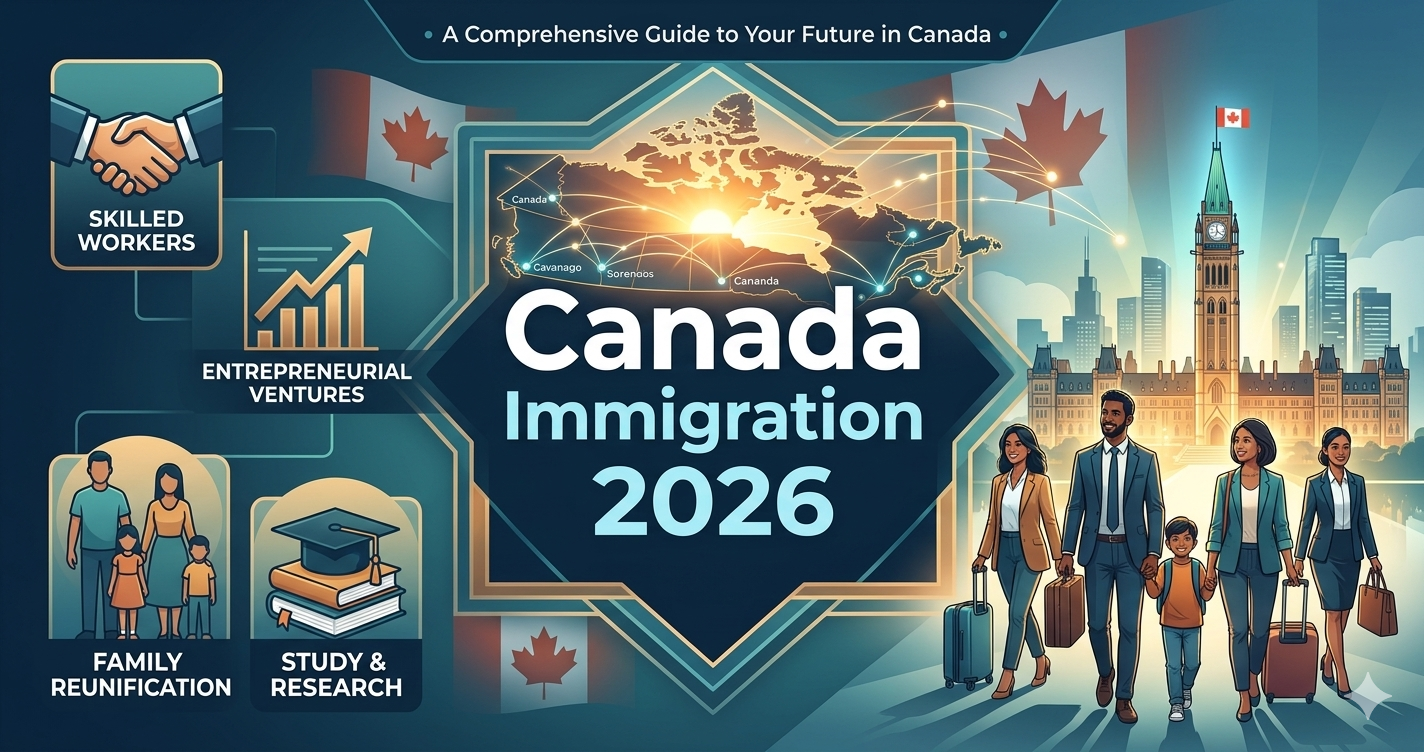
Canada have offers a multiple pathways of immigration as depending on a qualifications and goals of applicant. The most popular system is Express Entry, which have manages the applications through a points-based system called the Comprehensive Ranking System (CRS). Express Entry have includes a three main categories: Federal Skilled Worker Program, Federal Skilled Trades Program, and Canadian Experience Class. Candidates are ranked as based on the factors such as the age, education, language skills, and work experience.
Another major pathway is the Provincial Nominee Program (PNP). Each Canadian province has its own streams of immigration that are targeting a specific needs of labor market. A provincial nomination significantly increases the CRS score of an applicant and improves a chances of receiving an Invitation to Apply (ITA) for permanent residency.
Students also have a strong pathway through the education system of Canada. Many international students apply for a study permits, complete their education in Canada, and then apply for a work permits and eventually permanent residency. Similarly, skilled workers can enter to the Canada on a work permits and later transition to the PR after gaining Canadian work experience.
Step-by-Step Canada Immigration Process
The immigration process of Canada have begins with an assessment of eligibility. Applicants must evaluate their age, education, experience of work, and ability of a language. Once eligibility is confirmed, they must create an online profile, usually through the Express Entry system. This profile is then ranked as based on teh points of CRS.
Candidates with a high scores of CRS have receive an Invitation to Apply (ITA). After receiving the ITA, applicants must submit a complete documentation which is including an educational certificates, letters of a work experience, language test results, police clearance certificates, medical reports, and proof of a funds. Any missing or incorrect information can lead to a delays or rejection.
After submission, applications are processed by the Canadian immigration authorities. Processing times vary as depending on the program and profile of applicant. Once approved, applicants receive athe confirmation of permanent residency, which is allowing them to live and work as anywhere in Canada.
RCIC Immigration Consultant Services in Canada
Regulated Canadian Immigration Consultants (RCICs) play an important role in helping the applicants navigate the complex system of immigration. RCICs are licensed professionals that are authorized by the College of Immigration and Citizenship Consultants (CICC). They provide a legal immigration advice and represent the clients in during the process of application.
RCIC services have include an assessment of eligibility, selection of an immigration program, application preparation, and review of documentation. They also help to reduce the errors that could lead to a rejection. In addition, RCICs stay as updated with the latest policies of immigration, ensuring that the applicants receive an accurate and current guidance. For many applicants, especially those who are unfamiliar with the process, RCIC support significantly increases the chances of a success.
Canada Immigration Interview and Strategy Process
Many service providers of immigration have offer a structured process of consultation, which is often including a 30-minute session of interview. During this session, the applicants discuss their education, experience of work, language skills, and an immigration goals. The purpose is to determine the most suitable pathway of immigration and identify the areas for an improvement.
After an evaluation, a personalized strategy of immigration is created. This may include a suggestions to improve the scores of CRS, enhance a job readiness, or select the better programs of immigration. In many cases, applicants also receive a guidance on the preparation of resume to improve a job search opportunities in Canada. This step is extremely useful for the individuals who are unsure about their eligibility or want a professional direction before applying.
Eligibility Requirements for Canada PR 2026
To qualify for the Canada Permanent Residency, applicants must meet a several requirements. These include a recognized educational qualification, experience of skilled work, and proficiency of language in English or French through tests like as the IELTS or CELPIP. Age also plays an important role in the scoring of CRS, with a younger applicants who are receiving a higher points.
Applicants must also demonstrate a proof of funds to support themselves upon an arrival in the Canada. Additionally, medical examinations and security background checks are required to ensure the admissibility. Meeting these requirements does not guarantee an approval, but it have significantly increases the chances of receiving an invitation.
CRS Score System Explained
The Comprehensive Ranking System (CRS) is the backbone of a Canada’s Express Entry program. It have assigns a points to the applicants as based on factors such as the age, education, experience of work, and ability of language. Additional points can be earned through a job offers, provincial nominations, and proficiency in French language.
A higher CRS score have increases the likelihood of receiving an Invitation to Apply for a permanent residency. In 2026, competition is expected to remain as high, so the applicants must focus on maximizing their score through a better qualifications and strategic planning.
Canada Job Opportunities for Immigrants
Canada have offers a strong opportunities of job for the skilled immigrants in a multiple sectors. Healthcare professionals, IT specialists, engineers, construction workers, and transportation workers are in a high demand. Due to the ongoing shortages of labor, Canadian employers are actively hire the foreign workers to fill a critical roles.
Immigrants with a relevant skills and experience have a strong chances of securing an employment, which can also support their process of immigration. In many cases, job have offers significantly improve the CRS scores and increase the chances of a permanent residency approval.
Common Reasons for Visa Rejection
Many applicants face a rejection due to an avoidable mistakes. Common reasons have include an incomplete documentation, low scores of CRS, false information, and lack of a proof of funds. In some cases, the applicants also fail to meet a criteria of eligibility or provide a profiles of weak application.
Misrepresentation is a serious issue and can lead to a bans from the future applications. Therefore, accuracy, honesty, and proper documentation are essential for a successful application of immigration.
FAQs – Canada Immigration 2026
What is immigration target of Canada for 2026?
Canada have aims to welcome around a 395,000 new permanent residents in the 2026.
What is the easiest way to get Canada PR?
Express Entry and Provincial Nominee Program (PNP) are the most common pathways.
Do I need IELTS for a Canada immigration?
Yes, IELTS or CELPIP is required to prove the English or French language ability.
Can I apply for Canada PR without a job offer?
Yes, you can apply through the Express Entry without a job offer, but it improves your chances if you have one.
Conclusion
Canada Immigration 2026 have offers an excellent opportunities for a skilled workers, students, and professionals who are seeking for a better future. With a structured programs of immigration such as the Express Entry, Provincial Nominee Programs, and study-to-PR pathways, applicants have a multiple options which is depending on their qualifications.
However, the process is highly competitive and requires a careful planning, accurate documentation, and a strong profile. Understanding the scoring of CRC, eligibility requirements, and a program selection is crucial for success. With the right strategy and preparation, applicants can significantly increase their chances of achieving a permanent residency in the Canada and building a secure future in one of the most developed countries of world.